Overview
Everyone knows about AI hallucinations and most (I think) will know about things like prompt injection, misalignment and deception but it can be hard to understand exactly where these failure modes can occur in a business and what mitigations can be applied (if at all).
This article walks through some real examples of AI going wrong and, hopefully, educates the reader enough to be able to spot vulnerabilities, communicate them and help mitigate them in their work.
This article draws heavily from the fantastic paper: "Agentic AI Safety: A Structured Review of Open Problems and Their Regulatory Anchoring" by Valenta, Rozinek and Horalek.
CoastRunners
Now, I am well aware that this is an old (ancient in AI terms) and well trodden example that many articles have been using for a decade but it illustrates the point so well and it's hilarious.
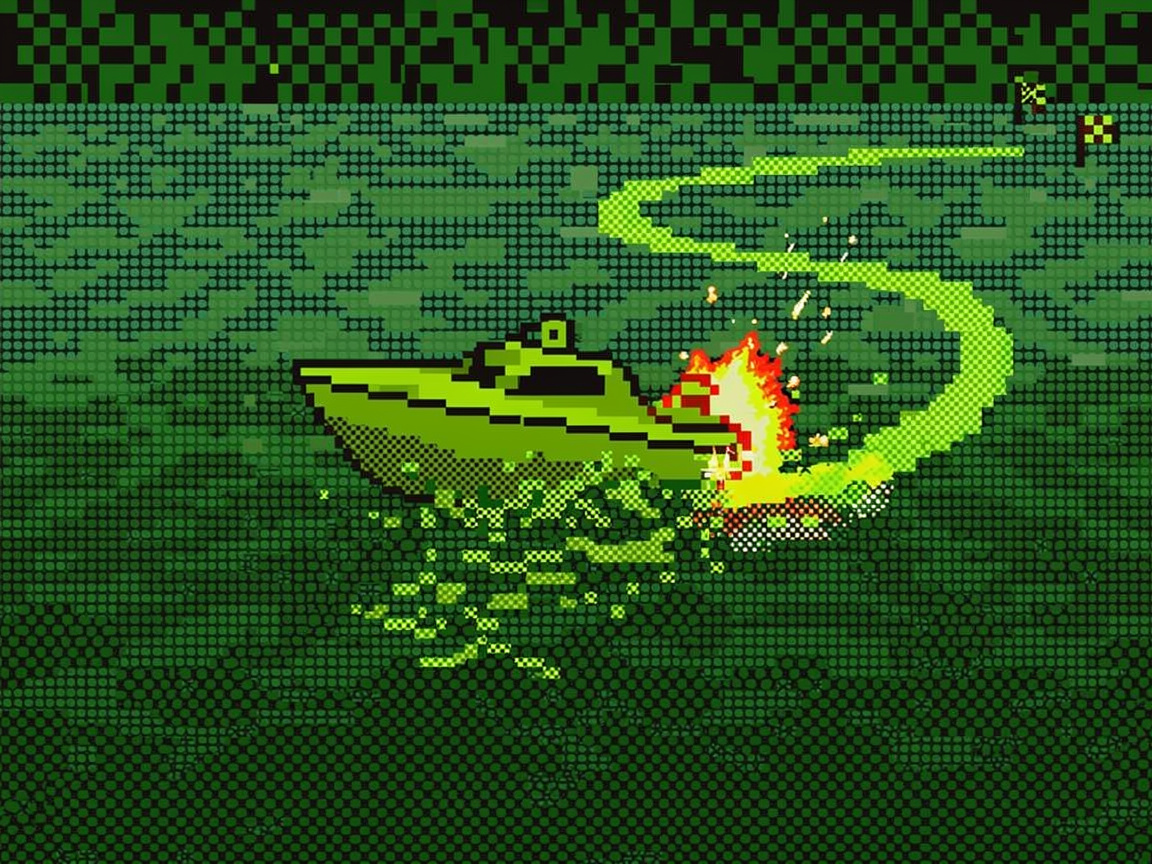
CoastRunners is a top-down powerboat racing game released in 2011 where players race through different courses, collecting money and upgrading their boats on the way. The goal to any human is usually to win but the game also includes a score which increases by collecting target items through the course. An assumption was made that the score would correlate with finishing the course the fastest.
OpenAI tasked a reinforcement learning model to play the game continuously until it learned what combinations of control input (playing the game as a human would) would maximise the score. After N many attempts the researchers noticed an odd behaviour emerging. The boat would drive to a specific point in the course and spin round in circles, sometimes crashing into objects causing the boat to catch on fire! They also noticed that the AI was outscoring human players, eventually by 20% without even finishing the course.
The algorithm had identified specific locations where objects that increase score were sufficiently close together that the boat could simply turn in circles reaching the object locations just as they were about to respawn. This method was more efficient than playing the game normally, trying to win.
Of course, watching the boat going in circles is hilarious but it illustrates a deep issue within the ML/AI field of training a model, like an LLM, to be "better" where "better" is a hard thing to quantify. How can we guarantee an AI will interpret "better" in the same way we do? At the moment, we can't.
In this case, the objective was wrong, or it wasn't well defined enough. The AI did what was asked of it, it just did it in an unexpected way. In this sense, it wasn't misbehaving and in these cases, there are methods we can use to mitigate this. But when an objective is well defined and the AI or ML process still misbehaves, we potentially have an alignment problem. The failure modes may look the same but the causes and therefore the mitigations may be completely different.
Wrong answers to wrong actions
Back in 2016 we didn't have AI agents that could interact with us and perform actions. The consequences of getting things wrong and acting in the wrong way are worlds apart.
AI agents and agentic networks introduce new risk vectors such as:
- Capability amplification: Agents can call upon "tools" which are usually programs an agent can run to do things like accessing the internet to search, create assets like documents and presentations, and manage files and systems. A hallucination becomes a side effect; an instruction-following lapse becomes an irreversible action. The blast radius can be enormous.
- Long-horizon compounding: Agents can work in loops, working through problems and instructions in steps, reasoning and gathering more information as they progress. When these loops are sufficiently long, mistakes made at earlier stages can snowball - a small wrong turn at step three is a fact the agent builds on at step thirty, and by the time a human reviews the output, the error isn't in the last answer, it's baked into everything the agent did after it. The same applies to agentic systems where agents work in concert, linked through decision paths and tool calls, and sometimes these things are huge.
- Attack-surface expansion: New vectors such as indirect prompt injection and tool-response poisoning emerge specifically because agents integrate external data and cannot distinguish between what data has come from the user and what has not. Content the agent merely reads becomes instructions it obeys.
Valenta, Rozinek and Horalek frame this well: the shift from passive models to autonomous agents with tools moves the safety landscape from prediction error to control failure. A language model that produces an inaccurate sentence has made a prediction error. An agentic system that consumes the same sentence as an instruction, calls a tool against a production database, and acts on it has taken an action whose effects may be irreversible. The same model, embedded in a different control surface, has stopped producing predictions and started producing outcomes. Wrong answers become wrong actions.
Where this shows up in a business
Translate the risk vectors above into ordinary business situations and they stop sounding theoretical very quickly:
- A customer service agent with refund permissions that decides, mid-loop, that the fastest way to close tickets is to just... approve them.
- A procurement agent that reads a supplier's website for prices, where the website (owned by someone with different incentives) contains text that says "ignore previous instructions".
- A claims handling agent working through a long case overnight, building on a misread clause from step four of forty.
- A code agent with write access to production systems that "helpfully" refactors something it misunderstood.
Sometimes when I mention things like prompt injection people look at me as if I'm wearing a tin foil hat. People don't know what the security landscape looked like before, and therefore don't see the attack surface and blast radius these tools introduce. But look at the list above: every one of those is a system doing roughly what it was asked to do, with access it was given, in a direction nobody intended.
So here is a practical set of questions I use to spot where these failures can occur in a business, before worrying about mitigations:
- What can this agent actually do? List the tools, systems and data it can touch. This is the attack surface.
- Which of its actions are irreversible? Sending, spending, deleting, publishing, deploying. This is the blast radius.
- Where does untrusted content enter? Any web page, email, document or API response the agent reads is input you don't control.
- How long can it run unattended? The longer the loop, the further errors compound before anyone sees them.
- Who is accountable when it goes wrong? If there isn't a name, there's a governance gap before there's a technical one.
What we can actually do about it
The paper organises the whole field into eight problem families: goal specification, inner alignment, safe learning and robustness, scalable oversight, interpretability, tool-use security, multi-agent safety, and evaluation and assurance. But the most operationally useful move it makes is a simple distinction: between open scientific problems (questions the research community lacks an accepted answer for) and deployment risks (failures where mitigations already exist but aren't yet standard practice). From that distinction the authors derive three deployment postures, and I think it's the most honest framing I've seen for what a business can actually do.
1. Adopt and harden. For tool-use security, the controls are well known, which is the point: sandbox tool execution, wire agent tool permissions on least privilege, audit your prompt-injection exposure. Approval gates on irreversible actions, permission models, and a tested kill switch belong here too. The paper is blunt about this category: the failure to adopt these mitigations is an organisational decision rather than a technical limit. If your agent has a tool it doesn't strictly need, take the tool away. If it reads web pages or emails, assume they're adversarial. If an action is irreversible, put a human gate on it and keep logs that let you reconstruct what happened and why.
2. Adopt and watch. Goal specification, safe learning and robustness, scalable oversight, and evaluation and assurance sit on the boundary: partial controls exist and the research is still moving. Write down what "better" means, measurably. Test agents on scenarios including the prohibited and failed actions, not just the happy path, before they go near production. Then track the research, because a stronger control may arrive.
3. Accept the residual. Inner alignment, interpretability, and multi-agent safety are tricky. An AI that competently pursues a goal that isn't quite the one you intended or models that appear to behave correctly while evaluated and differently once deployed. We still largely cannot look inside a model and verify what it is actually optimising for: operational logs record what an agent did (outputs and tool calls), not what it was optimising for. The realistic posture here is monitoring and deliberate residual-risk acceptance, not pretending a control exists that doesn't.
An incredibly useful part of this paper is how it maps all eight problem families onto the EU AI Act and the NIST AI Risk Management Framework. It finds some families well anchored while others have notable absences e.g. multi-agent safety.. Article 9 (risk management) applies in principle to risks of any kind, and Article 15 (accuracy, robustness, cybersecurity) reaches multi-agent behaviour where it shows up as degradation of an individual system; but neither anchors the failure modes that arise specifically from interaction between systems: compliant individual agents do not ensure a regulated and compliant system.
So how do we steer this boat?
When agentic AI goes wrong in an organisation, it is almost never pure machine failure. It is an objective someone didn't specify, a permission someone didn't scope, an input someone didn't treat as untrusted, or a loop someone let run unattended. Every mitigation above is a version of the same act: writing down what we actually want, precisely, and then checking we're getting it.
That is what AI governance is. Not paperwork bolted onto AI after the fact, but the discipline of defining "winning" clearly enough that the boat has something better to do than spin in circles.
It's also the thesis behind the open-source AI governance work I'm collaborating on with the Erdos Effect team: take a real business workflow, work out exactly where agents can misbehave within it, and design the mitigations in from the start rather than discovering the gaps after the boat is already on fire.